
My SEO Journey [Pro Edition]: Deepak Shukla from pearllemon.com – How I Used SEO as a Business Launch Engine (Not Just a Traffic Channel)

My SEO Journey [PRO Edition] is a series where professionals in the SEO Industry, Digital Marketing, or Web Design share their honest SEO Journey filled with failure, success, and most importantly, proven results. Episode #170 features Deepak Shukla from Pearl Lemon.
My name is Deepak Shukla, and I’m the founder of Pearl Lemon, an SEO-led growth group that started as a scrappy agency and evolved into a launchpad for multiple businesses across legal, accounting, property, PR, lead generation, and other niche service brands.
At its core, Pearl Lemon is not “just” an SEO agency. SEO is the engine, not the destination. We use organic search to validate markets, generate demand, and reduce go-to-market risk before scaling anything else.
Our flagship service is SEO and B2B lead generation, primarily for service-based businesses operating in competitive or regulated markets. These are often industries where paid ads are expensive, trust is slow to build, and buyers are sceptical by default.
SEO works exceptionally well here because it allows authority and intent to compound quietly over time.
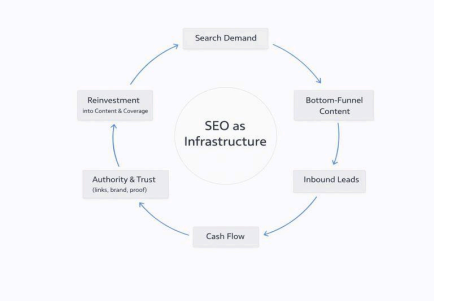
What’s different about how we operate is that we don’t just sell SEO, we use it internally as a business creation tool. Over the years, we’ve applied the same playbook to launch and grow our own portfolio of brands, often ranking and monetising them before they look polished, funded, or “startup-ready.”
Our mission is simple:
Build unfair distribution first.
Monetise second.
Polish last.
That philosophy runs against a lot of popular startup advice, which often prioritises branding, design, or fundraising early on.
But repeatedly, we’ve found that distribution solves more problems than aesthetics ever will.
My backstory and how I came up with the idea
I didn’t come from a traditional agency or corporate background. I grew up in West London, worked a long list of jobs in my early twenties, and spent a lot of time travelling. In hindsight, that period taught me far more about markets, arbitrage, incentives, and human behaviour than any formal business education could have.
Before Pearl Lemon, I wrote CVs to pay the bills, worked in sales roles, trained with the military, and ran various side hustles. None of them were glamorous, but each taught me something important about positioning, communication, and resilience.
I started Pearl Lemon in my early 30s after realising two uncomfortable truths:
1. SEO compounds harder than almost any other marketing channel
2. Most agencies don’t actually use SEO the way they sell it
The moment came when I noticed something that felt unfair at the time. Agencies ranking for SEO-related terms were closing deals without selling. Prospects came pre-sold, trusted them by default, and often overlooked better operators simply because they were harder to find.
Meanwhile, agencies doing objectively strong work were stuck cold-emailing, discounting, or relying entirely on referrals.
That gap between visibility and quality fascinated me.
I bootstrapped Pearl Lemon with no funding, no safety net, and no big launch. Just content, outreach, iteration, and repetition. There was no viral moment, only gradual traction.
At the time, my financial situation was unstable, which turned out to be a blessing. It forced me to focus on leverage instead of vanity. I couldn’t afford to chase shiny tactics; everything had to compound or be cut.
Anybody can generate an article. Knowing which one is worth writing is the hard part.
The AI Content Engine reads your site and your competitors, then builds a ranked content plan and writes it. Setup is free, and you see your plan before you pay for anything.
See your content plan freeSince launch, what has worked to attract more organic traffic?
1. Treating SEO like product-market fit testing
Most businesses use SEO to grow traffic for something they’ve already decided to build.
We do the opposite.
Before launching a new service or brand, we use SEO as a validation layer. The goal isn’t traffic, it’s signal.
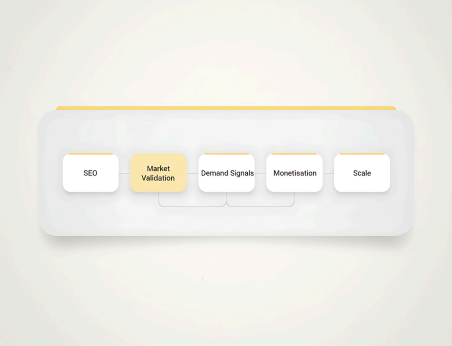
Our typical process looks like this:
● Build a lean website with minimal branding
● Publish bottom-of-funnel, high-intent content
● Target keywords that imply willingness to buy
● Watch how Google and users respond
● Track enquiries before investing heavily
If the site ranks and converts, we scale it.
If it doesn’t, we kill it quickly.
This approach has saved us hundreds of thousands in wasted development, branding, and hiring costs. It’s far easier to abandon a simple site than a “dream business” you’ve already emotionally invested in.
SEO tells you the truth early, if you’re willing to listen.
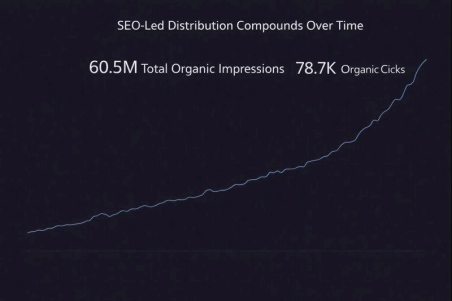
2. Publishing aggressively in “boring” niches
Our best-performing sites are rarely exciting.
Legal services. Accounting. Property compliance. Lead generation.
These are competitive, unsexy markets which is exactly why they work. Boring niches tend to:
● Have predictable, non-seasonal demand
● Attract buyers, not just readers
● Be underserved content-wise because they’re “not fun”
We publish relentlessly in these spaces, focusing on:
● Long-form service pages that actually explain the offering
● Commercial comparison content (alternatives, vs pages)
● Location + intent hybrids
● FAQs pulled directly from real sales calls
We don’t write content to impress other SEOs.
We write content to pre-handle objections before a sales call ever happens.
For us, SEO content isn’t “content marketing.”
It’s pre-sales documentation at scale.
3. Using SEO to bring customers back, not just acquire them
One of the biggest misses I see agencies make is focusing exclusively on top-of-funnel keywords.
SEO shouldn’t stop working once someone converts.
We intentionally create:
● Post-purchase content
● “What happens next” guides
● Expansion and use-case pages
● Educational resources clients refer back to
This reduces churn and increases lifetime value because customers feel informed, not sold to. It also lowers support burden and builds trust over time.
SEO isn’t just acquisition.
It’s retention insurance.
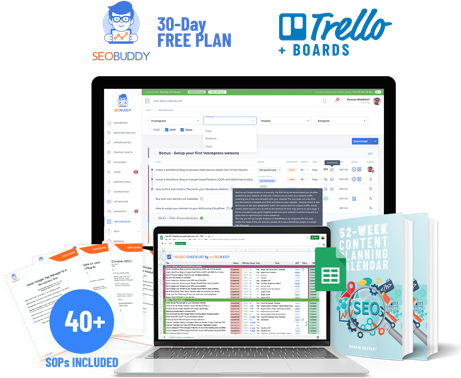
Now it’s time to discover the other 102 steps that will get more organic traffic flowing to your website. Get the SEO Checklist here — it’s free now, and so is the SOP Collection that goes with it. All you need is an account.
Want a look before you sign up?
Enter your email and I’ll send you the demo version.
Have you learned anything particularly helpful in your SEO journey?
Mistake #1: Overestimating Google’s patience
Early on, I believed that good work would eventually be rewarded.
That’s not how it works.
Google rewards:
● Publishing velocity
● Internal consistency
● Clear topical authority
Waiting too long between publishes, over-polishing content, or being “strategic” instead of prolific slowed us down more than any algorithm update ever did.
Momentum matters more than perfection, especially early on.
Mistake #2: Hiring SEOs who can’t explain revenue impact
Another early mistake was hiring people who were excellent at audits but weak at business translation.
Now, every SEO decision must answer one simple question:
“How does this keyword make money?”
If someone can’t explain how traffic turns into revenue, the tactic doesn’t get implemented. Rankings without commercial context are just numbers.
SEO divorced from revenue is a hobby.
What helped the most (that I didn’t expect)
Honestly?
Writing thousands of words myself.
Not because I’m the best writer but because it forced clarity:
● On positioning
● On objections
● On buyer psychology
● On what actually converts
Once that foundation was in place, delegation became far easier and far more effective.
What SEO tools do you use for your business? (Tech stack)
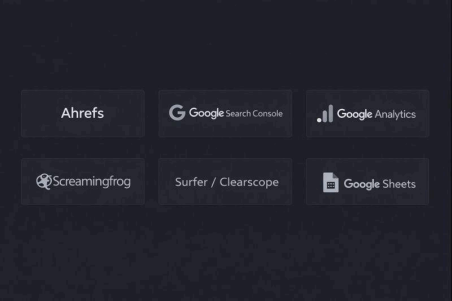
Our stack is intentionally boring and battle-tested:
● Ahrefs – competitive analysis, keyword validation, link tracking
● Google Search Console – reality checks (what Google actually thinks)
● Google Analytics – conversion paths, not vanity metrics
● Screaming Frog – technical hygiene at scale
● Surfer / Clearscope (selectively) – only when SERPs demand it
● Google Sheets – still the most underrated SEO tool on earth
Tools don’t create growth.
Decision-making frameworks do.
Can you share your efforts related to link building?
We’ve tested almost everything and most of it doesn’t scale.
What has worked consistently:
1. Digital PR tied to commercial pages
Not fluffy “brand awareness” campaigns, but commentary that earns contextual links and supports money pages indirectly.
2. Launching niche brands instead of begging for links
Owning multiple properties allows us to build relevance naturally and ethically over time.
3. Being prolific, not clever
Most link building fails because people try to be too smart and not persistent enough. Volume plus relevance beats novelty every time.
The Link Chest is a collection of high-quality, easy-to-win backlink opportunities. It’s the smart way to kickstart your SEO mission and improve the rank of your website in Google.

“This is such a simple idea but very well executed. I’ve been powering through this giant list of backlinks for a few hours and already have loads pointing to my site. Link Chest is an essential tool for early stage link building.”
Most influential books, podcasts, or resources
A few resources that genuinely shaped how I think about SEO and business:
● The Mom Test – honest idea validation
● $100M Offers (Alex Hormozi) – pricing clarity
● Indie Hackers – real-world experiments over theory
● Ahrefs Blog – consistently practical
● Old SEO case studies – timeless lessons still hidden in archives
What’s the next step in your SEO journey?
Right now, the focus is on:
● Systemising topical authority builds
● Training teams to think commercially, not tactically
● Using SEO as a repeatable company launcher, not a one-off growth channel
In the next 6–12 months, I want:
● Fewer sites
● Deeper authority
● Cleaner monetisation
● Stronger internal systems
SEO rewards patience but only if it’s paired with aggression and consistency.
Where can we go to learn more?
Website: https://pearllemon.com
LinkedIn: https://www.linkedin.com/in/deepakshukla
Blog: https://pearllemon.com/blog/
Final thought
SEO didn’t just grow my agency.
It changed how I decide what to build at all.
If you’re only using SEO to scale something you already love, you’re missing half the power. Use it to decide what deserves to exist in the first place.

Founder of Pearl Lemon

 My SEO Journey [Pro Edition]: Sanket Parmar from cmarix.com – How We Built…
My SEO Journey
My SEO Journey [Pro Edition]: Sanket Parmar from cmarix.com – How We Built…
My SEO Journey
 My SEO Journey [Pro Edition]: Breanna Golub from safaridigital.com.au – From Content Writer…
My SEO Journey
My SEO Journey [Pro Edition]: Breanna Golub from safaridigital.com.au – From Content Writer…
My SEO Journey
 My SEO Journey [Pro Edition]: Gethin Davies from futurmedia.co.uk – Building a DR48…
My SEO Journey
My SEO Journey [Pro Edition]: Gethin Davies from futurmedia.co.uk – Building a DR48…
My SEO Journey
 My SEO Journey [Pro Edition]: Thibault Louis-Lucas from Outrank – From Failed Startups…
My SEO Journey
My SEO Journey [Pro Edition]: Thibault Louis-Lucas from Outrank – From Failed Startups…
My SEO Journey
Get the SEO work done, not just read about it
Create a free account and run your first content plan, keyword research and link-building campaign. No card, and setup is free until your first article.
Free to start. We never sell your address.