
My SEO Journey: Mark Santos from markstudios.com – How Mark Studios Grew from 5 to 66 Referring Sites with Original Research and Free Tools

My SEO Journey is a series where professionals in the SEO Industry, Digital Marketing, or Web Design share their honest SEO Journey filled with failure, success, and most importantly, proven results. Episode #176 features Mark Santos from markstudios.com.
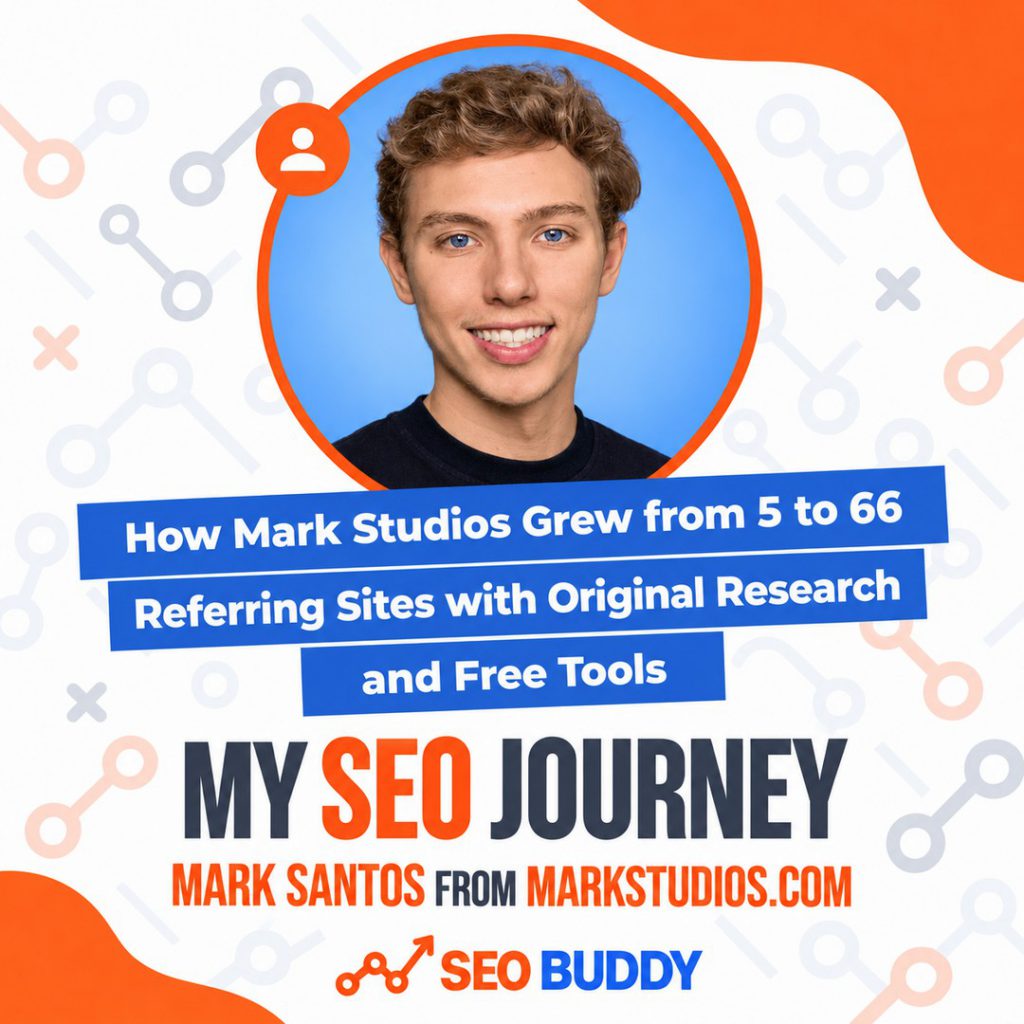
I’m Mark Santos, founder of Mark Studios, a video studio in Palm Beach County, Florida. Mark Studios edits videos for YouTube creators and businesses anywhere, from long-form YouTube episodes to Shorts, Reels and TikToks, and we film on location around Palm Beach, Broward and Martin counties.
Every project still runs through me, from the brief to the final file.
What’s your backstory and how did you come up with the idea?
I started editing video in 2011, when I was 10, on my own YouTube channel.
That channel eventually grew past 200,000 subscribers, and editing became the one skill I kept getting better at without ever thinking of it as a job.
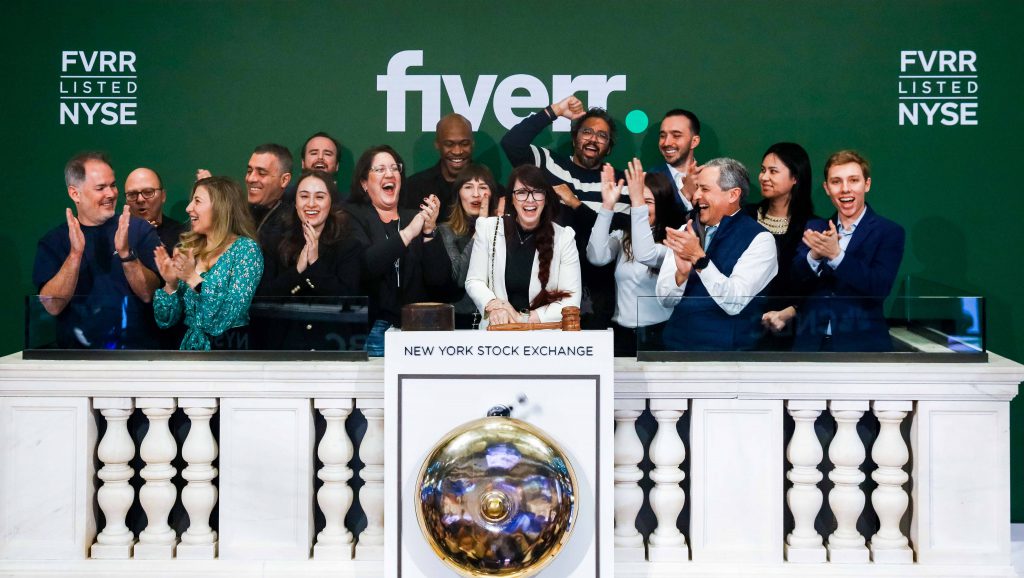
In 2020, while I was studying computer science at the University of South Florida, I started selling my editing on Fiverr. It grew faster than I expected. In February 2021 I founded Mark Studios LLC, and the studio has since completed more than 8,000 orders for over 4,500 clients, with a 4.9 rating and Top Rated status. Passing $1M in Fiverr orders led to one of the stranger days of my life: on February 19, 2025, I rang the New York Stock Exchange opening bell with Fiverr.
Almost all of that work came through a marketplace. markstudios.com was supposed to be where clients could find us directly, but for a long time it mostly reached people who already knew our name. That’s where the SEO journey starts.
Anybody can generate an article. Knowing which one is worth writing is the hard part.
The AI Content Engine reads your site and your competitors, then builds a ranked content plan and writes it. Setup is free, and you see your plan before you pay for anything.
See your content plan freeSince launch, what has worked to attract more organic traffic?
When I looked hard at Search Console in June 2026, the site was technically healthy and its pages were indexed.
But it had about five backlinks, and nearly all of its search traffic was people typing our name. We had already done the on-page work: titles, schema, internal links, page speed. The missing piece was authority, and no amount of on-page tuning was going to create it.
So I stopped asking “what can we publish?” and started asking “what would someone else need to link to?” Three challenges came out of that question.
The first challenge: nothing worth citing. Video marketing is full of statistics that everybody quotes and nobody checks.
I started tracing them back to the first document that published each one. A lot of them turned out to be much narrower than they sound, misquoted, or never measured at all. One of the most repeated, that viewers retain 95% of a message from video, comes from a small survey the agency that published it now describes as directional and more than 16 years old.
That work became our research section (https://www.markstudios.com/research): 28 pages, each figure checked at its original source with the date we checked it, plus a fact-check hub (https://www.markstudios.com/research/fact-check) that now traces 186 popular video statistics back to where they started.
The second challenge: data no one else had. Traced statistics are useful, but anyone willing to do the digging could do the same work. Original data is much harder to copy. So we measured things ourselves:
• 339,521 captions in 387 public NASA videos and MIT OpenCourseWare lectures, against the Netflix, BBC and DCMP reading-speed limits (https://www.markstudios.com/research/caption-reading-speed-study).
In 378 of the 387 videos, at least one caption moved faster than Netflix’s limit of 20 characters a second.
• The first messages of 698 people who wrote to us about editing, to see what buyers actually ask before hiring a video editor (https://www.markstudios.com/research/what-buyers-ask-before-hiring-a-video-editor).
Price was the first question three times as often as turnaround, and 55% pasted a link or asked for an edit “like this”.
• 7,056 of our own orders from 2023 to 2026 (https://www.markstudios.com/research/video-editing-outsourcing-benchmarks).
The 24.7% of clients who came back placed 59.8% of all orders, and the median standalone order was due 6 days after it was placed.
Each study publishes its method and its limitations, and the caption study’s checker is open source.
That turned out to matter: people link to numbers they can verify.
The third challenge: getting anyone to see it. A research page with no links is just a long page.
What has worked for us is being useful to the people who already write about video. When a page cites a source that has died, we send the author the original and an archived copy. We pitch guest articles built on our own data, written for that publication’s readers. We publish charts under a free-to-reuse license with embed code. And we built 16 free, no-sign-up tools for creators, like a caption checker, a video file size calculator and a YouTube thumbnail checker, which give people a reason to link that isn’t a favor.
What results have you seen?
Real referring sites grew from about five in June to around 66 by October, 14 of them with a Domain Rating of 30 or more: a guest post on SolidGigs, a Q&A in Marketer Magazine, a launch roundup on Peekwire, a dead-link fix on Ecamm’s blog and a handful of developer listings for the caption checker. Ahrefs shows a Domain Rating of 24.
I want to be honest about one thing, because it surprised me. Ahrefs lists about 870 sites linking to us, and roughly 800 of them are auto-generated SEO-tool pages that list any domain someone types into them. Nobody built those links and they’re worth very little. If you only watch the headline referring-domain count, you can convince yourself you’re winning. The count worth watching is real, followed links from sites people actually read.
AI search is the other change. In our own spot checks, Google’s AI Mode has cited our research pages, and Perplexity has started naming Mark Studios in answers about monthly editing plans and podcast editing, citing our own guides. Those mentions came after we published prices and specific facts that an answer engine could quote.
What did you change for AI search?
Answer engines like Google’s AI Mode, ChatGPT and Perplexity build their answers from pages that state things plainly. When I asked them for a YouTube video editing agency, the answers came back as small comparison tables: a starting price, a turnaround, who each option is best for. Most of the agencies that got named had that on their own pages. We didn’t, because we had kept our prices inside the quote form.
So we published our monthly plan prices on a pricing page, rewrote our key service pages to answer the question at the top, added a plain line saying which Mark Studios we are (there are a few businesses with the same name), and kept an llms.txt file that describes the site in a few paragraphs. In our analytics, visitors who land on a free tool click through to a quote far more often than blog readers do, so the tools double as both link bait and a way in for buyers.
Have you learned anything particularly helpful in your SEO journey?
Five things.
1. Be the source, not the list.
A page that repeats numbers competes with every other list.
A page that shows where a number came from is the one people link when they need to be sure.
2. Measure your outreach by type.
We tracked every pitch we sent. Guest posts earned links at roughly ten times the rate of the “your statistic is wrong” emails, which produced nothing from more than a hundred sends, even when we were right. Being correct is not the same as being useful to the person reading your email.
3. Your own network can hurt you.
At one point, footer links from our own sister sites made up almost all of our backlinks, and around the same time Bing stopped showing the site for almost anything. We made those links nofollow. Links other people choose to give are the only kind that count for much.
4. Ship fewer, better pages.
Google’s crawl of a young site follows its authority. New pages waited weeks for a first crawl, so publishing more thin pages only made the queue longer.
Now the effort goes into pages that already rank between 8 and 20.
5. Keep everything checkable.
Every figure on our research pages has a date and a source. When we’re wrong, readers can tell us, and the page gets better.
What SEO tools do you use for your business? Your SEO tech stack
• Google Search Console for indexing, queries and the URL Inspection tool.
• Bing Webmaster Tools and IndexNow, so new and updated pages reach Bing the same day.
• Ahrefs Webmaster Tools (the free tier) for backlinks and Domain Rating.
• The Internet Archive’s Wayback Machine, which is where most of our source tracing happens once an original page has gone offline.
• Google Analytics 4, to see which pages and sources actually turn into quote requests.
Can you share your efforts related to link building?
We don’t buy links. A guaranteed Domain Rating number usually means links nobody chose to give. Everything comes from research people want to cite, corrections that help the person we’re writing to, free tools, and guest articles that stand on their own. It’s slower than buying placements, but every link we earn points at a page that deserves it.
What have been the most influential books, podcasts, or other resources?
The primary sources themselves: the original surveys, government statistics tables and platform documentation, rather than the lists that quote them. For the technical side, Google Search Central’s documentation covered most of what we needed, and YouTube’s own Help Center is still the best source on how YouTube works.
What’s the next step in your SEO journey?
More first-party research. Our own order data can answer questions nobody else can, like how long different kinds of edits really take, and that’s the kind of page worth linking to. I also want to earn more coverage from people outside the SEO world: local press, podcasts and the publications our clients read.
Where can we go to learn more?
• Mark Studios: https://www.markstudios.com
• Our research: https://www.markstudios.com/research
• Popular video statistics, fact-checked: https://www.markstudios.com/research/fact-check
• Free tools for creators: https://www.markstudios.com/tools
• Mark on X: https://x.com/markksantos

Founder at Mark Studios

 My SEO Journey: Hussain Jatoi from hussainjatoi.com – Why I Stopped Treating SEO…
My SEO Journey
 My SEO Journey [Pro Edition]: Sanket Parmar from cmarix.com – How We Built…
My SEO Journey
 My SEO Journey [Pro Edition]: Breanna Golub from safaridigital.com.au – From Content Writer…
My SEO Journey
 My SEO Journey [Pro Edition]: Gethin Davies from futurmedia.co.uk – Building a DR48…
My SEO Journey
Get the SEO work done, not just read about it
Create a free account and run your first content plan, keyword research and link-building campaign. No card, and setup is free until your first article.
Free to start. We never sell your address.