
My SEO Journey [Pro Edition]: Gethin Davies from futurmedia.co.uk – Building a DR48 SEO Agency While Learning the Hard Way About AI Content

My SEO Journey [PRO Edition] is a series where professionals in the SEO Industry, Digital Marketing, or Web Design share their honest SEO Journey filled with failure, success, and most importantly, proven results. Episode #172 features Gethin Davies from Futur Media.
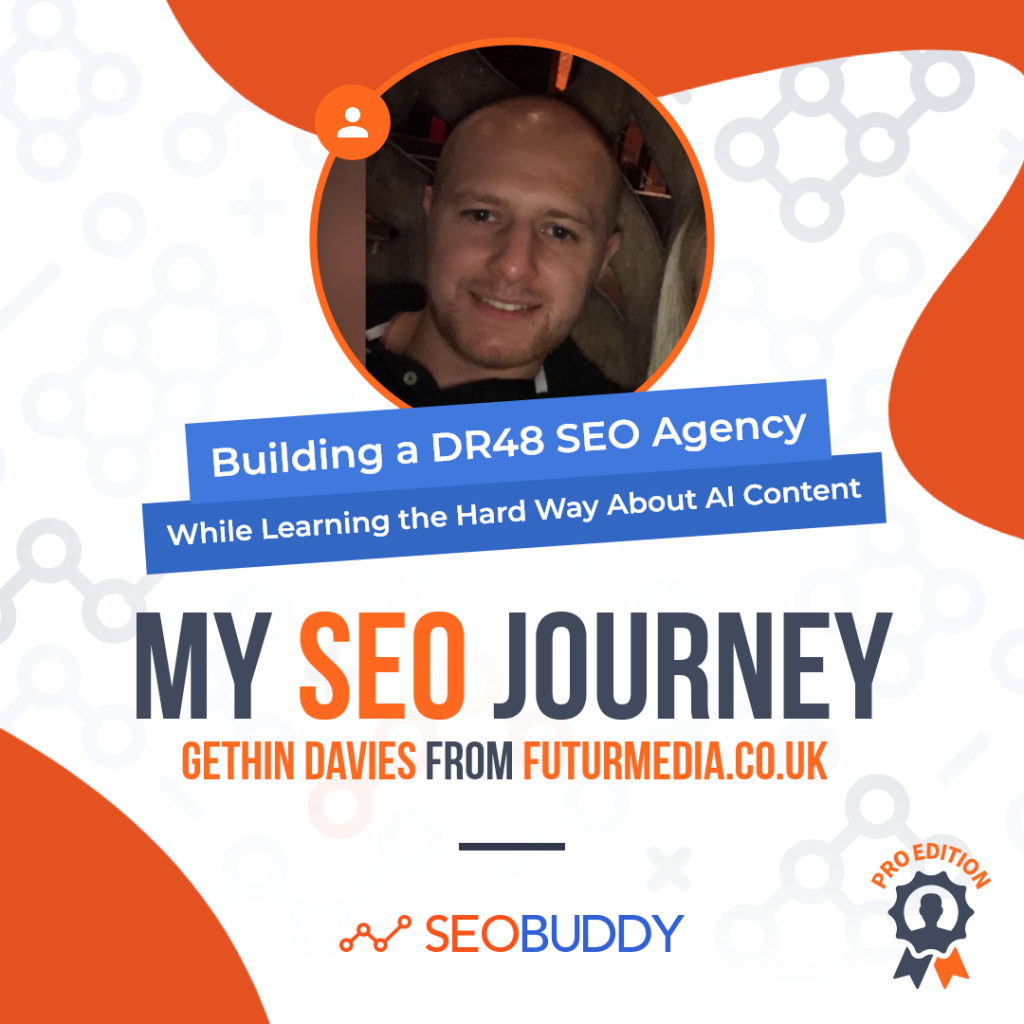
I’m Gethin Davies, founder of Futur Media. We’re a Shopify agency based in Cardiff. We design and build stores, then handle the SEO and CRO work that keeps them growing once they’re live.
Most of our clients are independent ecommerce brands — coffee roasters, bike shops, workwear, that sort of thing. The thing I care about more than anything is that a store still earns its keep six months after launch, not just that it looked the part on day one.
What’s your backstory and how did you come up with the idea?
I started Futur because I wanted to build better online experiences for Shopify owners. Not pretty stores that just sit there looking nice, but stores that actually sell. That’s still the whole point of the place.
When I started out there were loads of agencies that could put together a good-looking site, and plenty who’d happily “do your SEO”, but hardly anyone treating those two things as the same job. A store can rank brilliantly and convert at one percent. That’s a failure in my book. So is a store that converts well but nobody can find. I wanted to own both ends of it.
We built our own site on Webflow and used the blog as a test bed — it’s well over 200 posts now. A fair bit of what we recommend to clients, we got wrong on ourselves first and learned from there.
Anybody can generate an article. Knowing which one is worth writing is the hard part.
The AI Content Engine reads your site and your competitors, then builds a ranked content plan and writes it. Setup is free, and you see your plan before you pay for anything.
See your content plan freeSince launch, what has worked to attract more organic traffic?
Two things, mainly. Building real authority, and getting our money pages to rank for the terms that actually bring in work.
On authority, we’ve taken our own domain from the high 30s up to a DR of 48, with around 310 referring domains. The biggest lesson on that front came from a client rather than us. For Infinitas Food Safety we landed a single editorial link from the CIEH, a DA 82 body, and their domain authority went from 12 to 21 off the back of it. One relevant link from the right place did more than a pile of average ones ever could, and it changed how I think about link building full stop.
The other thing, and this one’s newer, is turning up in AI answers rather than just the blue links. We checked where we showed up across UK Shopify-agency prompts in ChatGPT and found Futur in six of them, sitting second among UK agencies on that particular surface. Search is splitting into AI Overviews and chat answers, and being the thing that gets quoted is becoming a job of its own.
The Link Chest is a collection of high-quality, easy-to-win backlink opportunities. It’s the smart way to kickstart your SEO mission and improve the rank of your website in Google.

“This is such a simple idea but very well executed. I’ve been powering through this giant list of backlinks for a few hours and already have loads pointing to my site. Link Chest is an essential tool for early stage link building.”
Have you learned anything particularly helpful in your SEO Journey?
I have, and the most useful one cost me, so I’ll be straight about it.
At one point we went heavy on AI-written content to scale the blog quickly. It looked productive. Then Google’s May 2026 core update landed and all that thin content went from an asset to a liability more or less overnight. Our visibility dropped from about 5% down to around 0.7%. The strange part is that a lot of it wasn’t even normal ranking loss. We were losing AI Overview citations and the impressions that came with them, while the clicks had been quietly leaking away for a while before that.
Picking through the mess taught me two things I won’t forget. First, keyword cannibalisation is a quiet killer. We had blog posts competing with our own service pages for the same commercial terms, splitting the authority instead of pooling it. Sorting that out is now some of the best-value work we do. Second, volume isn’t a strategy. A hundred forgettable posts will sink you the moment Google decides to reward real expertise. I’d take ten posts a person actually wants to read over two hundred written for a crawler.
The recovery is still going on as I write this. It isn’t a tidy “and then we fixed it” story yet, and I’d rather admit that than pretend otherwise.
What SEO tools do you use for your business?
SE Ranking does most of the heavy lifting — rank tracking, backlinks, competitor work. We’ve hooked it into our workflow through its MCP integration, so we can pull the data we need on the fly instead of living inside dashboards.
Google Search Console is still where I go for the truth, especially for catching that impressions-versus-clicks gap early.
Shopify, Webflow and Tailwind are the build stack. Client stores run on a custom Shopify theme we built ourselves with Tailwind, and our own site is on Webflow.
Rhino Rank for managed link building when we want to point authority at a specific page.
One warning on AI content tools, since I learned it the hard way: use them as an assistant, never as the writer. The tool itself is fine. The mistake was letting it do our thinking for us.
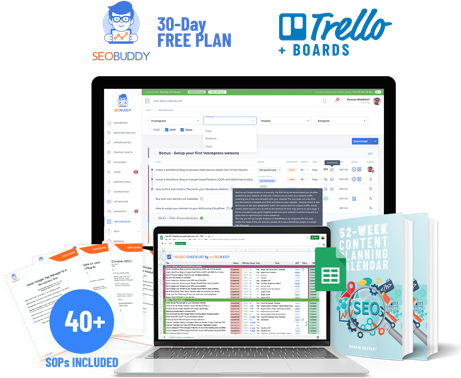
Now it’s time to discover the other 102 steps that will get more organic traffic flowing to your website. Get the SEO Checklist here — it’s free now, and so is the SOP Collection that goes with it. All you need is an account.
Want a look before you sign up?
Enter your email and I’ll send you the demo version.
Can you share your efforts related to Link-Building?
Our profile is at DR 48 with around 310 referring domains, and the most useful thing analysing it told me was about geography. We were heavily skewed toward Belgium, over 100 referring domains from there, with barely any from the UK. Bit of a problem when all your clients are British brands. So right now we’re going after relevant, UK-weighted links on purpose rather than just running up the domain count.
Recent ones include a deep contextual placement on a DA 49 site pointing at our Shopify development pages, plus partner listings with Recharge, Gorgias and Okendo. I’m honest with myself about those last few, mind. They’re good for credibility and referrals, but they aren’t moving the authority needle, and it’s easy to kid yourself they are.
The rule underneath all of it: know your most valuable pages, steer links toward them, but make sure you’ve actually got something worth linking to first. You can’t out-outreach a thin website.
What have been the most influential books, podcasts, or other resources?
I read more business books than SEO ones, and I reckon that’s helped the SEO side rather than hurt it, because most SEO problems are business problems in disguise.
Building a Story Brand by Donald Miller changed how we approach every store. If the message isn’t clear, no amount of ranking saves your conversion rate. Obviously Awesome by April Dunford is the one I’d give any specialist agency, and it’s a big reason we position ourselves as a Shopify shop rather than a do-it-all one. $100M Offers by Alex Hormozi tightened up how we think about offers and outreach, which is basically how we win clients.
Podcast-wise, The Diary of a CEO and How I Built This are always on. Founder stories are a sneaky-good SEO education when you think about it, because you learn how businesses compound slowly over time, and that’s the same patience SEO needs. Nudge by Phill Agnew is great for the behavioural side of CRO.
What’s the next step in your SEO Journey?
Short term it’s recovery and tidying up. Finishing the core-update cleanup, killing off the cannibalisation, and rebuilding our Cardiff local presence properly, Google Business Profile included, which I’d let slide.
Longer term I’m betting on answer-engine optimisation. The move from “rank on page one” to “get cited in the AI answer” is the biggest shift our industry’s had in years, and a lot of agencies are acting like it isn’t happening. I’d rather be early and occasionally wrong than late and comfortable.
Where can we go to learn more
The agency: https://futurmedia.co.uk
Our Shopify development and migration work: https://futurmedia.co.uk/services/shopify-development
LinkedIn: https://www.linkedin.com/in/gethin-davies-59301b86/
Instagram: https://www.instagram.com/futuragency_/

Founder at Futur Media

 My SEO Journey: Hussain Jatoi from hussainjatoi.com – Why I Stopped Treating SEO…
My SEO Journey
My SEO Journey: Hussain Jatoi from hussainjatoi.com – Why I Stopped Treating SEO…
My SEO Journey
 My SEO Journey [Pro Edition]: Sanket Parmar from cmarix.com – How We Built…
My SEO Journey
My SEO Journey [Pro Edition]: Sanket Parmar from cmarix.com – How We Built…
My SEO Journey
 My SEO Journey [Pro Edition]: Breanna Golub from safaridigital.com.au – From Content Writer…
My SEO Journey
My SEO Journey [Pro Edition]: Breanna Golub from safaridigital.com.au – From Content Writer…
My SEO Journey
 My SEO Journey [Pro Edition]: Thibault Louis-Lucas from Outrank – From Failed Startups…
My SEO Journey
My SEO Journey [Pro Edition]: Thibault Louis-Lucas from Outrank – From Failed Startups…
My SEO Journey
Get the SEO work done, not just read about it
Create a free account and run your first content plan, keyword research and link-building campaign. No card, and setup is free until your first article.
Free to start. We never sell your address.